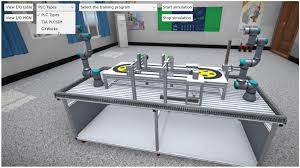
Plc Alarms & Fault Handling - Practical Hands-On Virtual Lab
Last updated 2/2026
MP4 | Video: h264, 1920x1080 | Audio: AAC, 44.1 KHz, 2 Ch
Language: English | Duration: 1h 3m | Size: 658.06 MB
Build alarm and fault logic exactly like used in industrial Programmable Logic Controller PLC systems.
What you'll learn
Design professional PLC alarm logic using ladder diagrams
Build latched alarms with proper acknowledgment and reset logic
Implement fault detection, counters, and automatic lockout systems
Create fail-safe safety circuits including overload and E-Stop logic
Develop complete industrial interlock systems used in real factories
Requirements
No advanced PLC experience is required.
Basic understanding of PLC ladder logic
Familiarity with digital inputs and outputs
Description
PLC Alarms & Fault Handling - Practical Ladder Logic
Build alarm and fault logic exactly like used in industrial PLC systems
________________________________________
Course Overview
Most PLC courses teach you how to start motors and turn outputs ON and OFF.
Very few teach you what truly matters in real industrial systems
Alarm handling, fault management, interlocks, protection logic, and safety design.
In real factories, equipment failures don't happen because someone forgot a timer.
• They happen because alarms were poorly designed.
• They happen because faults were ignored.
• They happen because interlocks were missing.
This course teaches you how to design PLC alarm and fault logic the way it is actually done in industry.
This is a 100% practical course. No unnecessary theory. No slides full of definitions.
You will build real alarm systems using ladder logic step-by-step inside a simulated industrial environment.
________________________________________
What You Will Learn
• Design basic alarm detection using AND/OR logic
• Build latched alarms with proper operator acknowledgment
• Implement time-delayed alarms to eliminate false triggers
• Create motor overload protection logic
• Design fail-safe Emergency Stop (E-Stop) circuits
• Develop alarm priority systems for real-world operations
• Implement fault counters with automatic lockout
• Build intelligent auto-recovery logic
• Create structured alarm event logging
• Combine everything into a complete industrial interlock system
By the end of this course, you will understand how professional PLC programmers design alarm and fault handling systems in real plants.
________________________________________
Why This Course Is Different
This course focuses only on alarm and fault handling - the most critical part of industrial automation.
You are not just learning how to program.
You are learning how to think like an automation engineer.
You will understand
• Why false alarms are dangerous
• Why latching is essential for safety
• Why fault counters prevent catastrophic failures
• Why interlocks protect equipment and people
• How proper alarm design reduces downtime
These are job-ready skills used in
• Manufacturing plants
• Oil & gas facilities
• Power plants
• Water treatment plants
• Process industries
________________________________________
Who this course is for
Electrical Engineers
Instrumentation & Control Engineers
PLC Programmers
Maintenance Engineers
Technicians working with industrial systems
Students who already understand basic PLC ladder logic