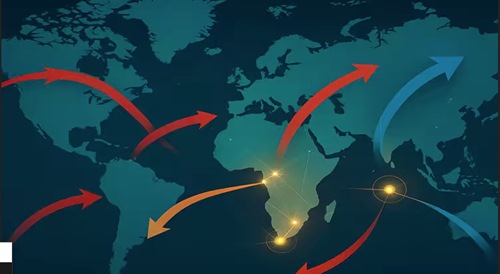
 Geopolitics In The 21st Century Reimagined
Published 4/2026
MP4 | Video: h264, 1920x1080 | Audio: AAC, 44.1 KHz, 2 Ch
Language: English | Duration: 6h 45m | Size: 7.75 GB
Power, Strategy, and Global Competition in an Age of Disruption
What you'll learn
Understand how the world is moving from unipolarity to contested multipolarity, and assess the strategic implications for major and emerging powers.
Be able to interpret conflicts in the Middle East, Indo Pacific, and Africa using frameworks grounded in geography, power, and national interests.
Explain how energy, critical minerals, AI, cyber capabilities, and chokepoints influence state behavior and international competition.
Use structured analysis to evaluate escalation risks, stakeholder interests, and decision pathways in complex crises - culminating in the Taiwan blockade simula
Identify how proliferation, tactical nuclear weapons, and the erosion of arms control regimes affect global stability.
Requirements
This course is designed to be accessible yet rigorous. Learners will benefit from having: • An interest in global affairs, strategy, or international politics • Basic familiarity with current events (helpful but not required) • Willingness to engage with analytical frameworks • No prior academic background in geopolitics or IR is required Everything needed to follow the course is explained clearly and progressively.
Description
This course provides a comprehensive, strategic introduction to geopolitics in the 21st century. It is a comprehensive framework for understanding how power, conflict, and cooperation are reshaping our world. You'll explore how global power is shifting, why regional flashpoints are intensifying, and how geography, resources, technology, and political interests interact to shape world affairs. From the return of great‑power rivalry to the rise of middle powers and the weaponization of supply chains, this course equips you with the frameworks needed to interpret global events with clarity and depth.
Through real‑world case studies-including the U.S.-China competition in the Indo‑Pacific, Iran's asymmetric strategy in the Gulf, Russia's disruptive influence, and the geopolitical reordering of Africa-you'll examine how states pursue power, manage risk, and navigate an increasingly multipolar world. You'll analyze strategic chokepoints like the Strait of Hormuz and the South China Sea, assess the impact of AI and emerging technologies on global competition, and explore the evolving nuclear landscape and escalation risks.
The course culminates in a capstone simulation of a Taiwan blockade crisis, where you'll apply strategic thinking to a realistic, high‑stakes scenario. This exercise reinforces your ability to evaluate interests, anticipate second‑order effects, and understand the dynamics of crisis decision‑making.
Designed for analysts, lifelong learners, journalists, policymakers, and strategic thinkers, this geopolitics course blends political geography, international relations, security studies, and real‑world case analysis. It provides a clear, structured, and ethically grounded understanding of the forces reshaping global order. This course blends academic depth with real‑world experience to help you see global events not as isolated headlines, but as interconnected strategic patterns.
This course was created and delivered by Benedict Kioko Mwololo, drawing on decades of leadership in military strategy, UN peacekeeping, and academic curriculum design, and he guides you through the forces driving today's geopolitics - from great‑power rivalry and regional conflicts to technology, energy, and Africa's emerging role in global affairs. AI tools were used during development to support drafting and structuring, and all content has been rigorously reviewed, fact‑checked, and refined by the instructor to ensure accuracy, coherence, and relevance.
Who this course is for
Analysts and researchers: Working in security, policy, intelligence, risk, or international development.
Students and lifelong learners: Studying political science, international relations, history, economics, or strategic studies.
Journalists and media professionals: Covering global affairs, conflict, diplomacy, or emerging technologies.
Business and corporate leaders: Needing geopolitical awareness for strategic planning, supply chain resilience, or risk assessment.
Diplomats, NGO workers, and public sector professionals:Engaged in foreign policy, humanitarian work, or regional programs.
Anyone seeking a clear, structured understanding of global power dynamics: Whether for professional development or personal interest.