
|
Python: Astronomical Data Analysis & Visualization
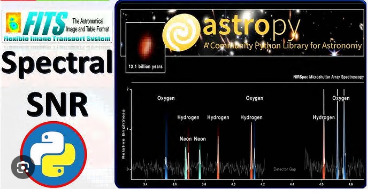 Python: Astronomical Data Analysis & Visualization Published 4/2026 Created by DESI ASTRO MP4 | Video: h264, 1920x1080 | Audio: AAC, 44.1 KHz, 2 Ch Level: Beginner | Genre: eLearning | Language: English | Duration: 6 Lectures ( 33m ) | Size: 407 MB Astronomical Data Analysis & Visualization What you'll learn ✓ Installing Python Library ✓ Downloading FITS Astronomical Data: Image/Spectra/Data Cube/Light Curve ✓ Learn how to read and visualize observational data from telescope : FITS Image/Spectra/Data Cube/Light Curve ✓ Learn how to manipulate and analyse: FITS Image/Spectra/Data Cube/Light Curve Requirements ● Basic Python Coding such as: Numpy ,Matplotlib and Astropy Description This course on astronomical observational data visualization provides a comprehensive dive into the multidimensional world of spectroscopic image data cubes, the gold standard for modern observational astronomy. While a standard digital photograph captures two spatial dimensions (x, y), astronomical instruments like Integral Field Units (IFUs) capture a third dimension: wavelength. Participants will learn to navigate and manipulate FITS (Flexible Image Transport System) files, the universal data format in astronomy. We will deconstruct the "cube" architecture, where every spatial pixel (spaxel) contains a full spectrum, allowing us to map chemical compositions, temperatures, and velocities across celestial objects. Key Learning Objectives • Data Structure: Master the coordinate systems (WCS) that link pixel indices to Right Ascension, Declination, and Frequency/Wavelength. • Slicing & Dicing: Techniques for collapsing cubes into 2D intensity maps or extracting 1D spectra from specific regions of interest. • Visualization Tools: Hands-on experience with Python libraries (SpectralCube, Astropy) and software like DS9 or Glue to render 3D volumes. • Kinematic Analysis: Using the Doppler shift within the cube to visualize the internal rotation of galaxies or the expansion of nebulae. By the end of this course, you will transform raw, high-dimensional datasets into intuitive, scientifically robust visualizations that reveal the hidden physics of the universe. Who this course is for ■ Beginners course for undergraduate and graduate students |
| Часовой пояс GMT +3, время: 21:34. |
vBulletin® Version 3.6.8.
Copyright ©2000 - 2026, Jelsoft Enterprises Ltd.
Перевод: zCarot