
|
Distributed Control Systems (dcs): Complete Masterclass
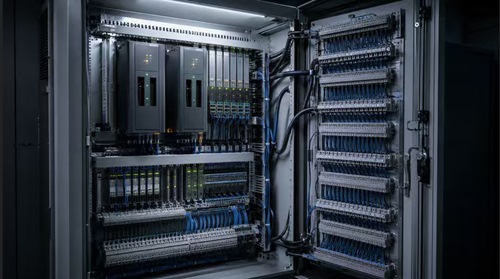 Distributed Control Systems (dcs): Complete Masterclass Published 6/2026 MP4 | Video: h264, 1920x1080 | Audio: AAC, 44.1 KHz, 2 Ch Language: English | Duration: 2h 33m | Size: 3.34 GB What you'll learn Explain DCS architecture - controllers, I/O, redundancy and networks - and where a DCS fits versus PLC and SCADA Specify DCS I/O, signal conditioning and marshalling for a control system design Orient quickly across Honeywell, Emerson, ABB and Yokogawa platforms Configure PID loops and select the correct controller modes and tuning approach Build advanced control strategies - cascade, ratio, feedforward and override Configure control modules and function blocks and structure the DCS database Design high-performance HMI graphics to ISA-101 for situation awareness Rationalise and manage alarms to ISA-18.2 and EEMUA 191 Plan a DCS engineering workflow from database build and bulk engineering through FAT Run loop checks, SAT and commissioning activities on a DCS Manage DCS operations - backups, patching and lifecycle - through the plant's life Design and document an applied DCS control strategy as a section project Requirements A background in C&I, control, automation or electrical engineering is assumed Familiarity with P&IDs, control loops and basic process plant equipment This is a practitioner-level course, not a first introduction to control No specific DCS software or vendor licence is required to follow the material A willingness to think through a control strategy from sensor to final element Description This course contains the use of artificial intelligence. The DCS is the operational heart of every continuous process plant - and the engineer who understands it at a practitioner level, not just as a black box, is the one who gets the project over the line. This course teaches the DCS the way it is engineered and operated on live plants. It covers architecture and I/O, the major platforms, control strategies from PID through advanced schemes, HMI and alarm management, and the engineering workflow from database build to commissioning. The work is anchored in the standards that govern modern control rooms: ISA-18.2 and EEMUA 191 for alarm management and rationalisation, and ISA-101 for high-performance HMI graphics and situation awareness. These are explained and applied, not name-dropped. It opens with what a DCS is and where it sits - DCS versus PLC versus SCADA - then moves into architecture: controllers, I/O, redundancy, and the networks that tie them together. The hardware and I/O lesson covers signal conditioning and marshalling, and the platforms lesson gives an honest orientation to Honeywell Experion, Emerson DeltaV, ABB 800xA, and Yokogawa Centum so the concepts transfer across whichever system you work on. Control strategy is covered across two lessons: PID, loop tuning and controller modes first, then the advanced schemes - cascade, ratio, feedforward and override - that real processes actually need. Function block configuration shows how control modules and the database are built, and the HMI lesson applies ISA-101 - grey backgrounds, situation awareness, and high-performance graphics that reduce operator error. Alarm management is treated as its own discipline: ISA-18.2 and EEMUA 191, rationalisation, and the metrics that distinguish a manageable alarm system from an unworkable one. The course is built by a practising engineer with 15+ years specifying and commissioning DCS on oil and gas and energy projects - including database build, bulk engineering, FAT, loop checks and SAT. The workflow, commissioning, and operations lessons reflect what actually happens from database to live plant, including backups, patching and lifecycle. If you work with a DCS - and you want to engineer it rather than just operate around one - start with the architecture lessons and work through to the control strategy section project. Who this course is for C&I, control and automation engineers who specify, configure or commission a DCS Control room operators and DCS technicians who want to engineer the system, not just run it Commissioning, maintenance and operations staff supporting DCS loop checks, SAT and day-to-day running System integrators and vendor engineers working on Honeywell, Emerson, ABB or Yokogawa platforms Process, electrical and project engineers reviewing DCS architecture, alarms and HMI design Technical sales and application staff at DCS and control system vendors Graduates, apprentices and career changers entering process control who need practitioner-level grounding Цитата:
|
| Часовой пояс GMT +3, время: 15:47. |
vBulletin® Version 3.6.8.
Copyright ©2000 - 2026, Jelsoft Enterprises Ltd.
Перевод: zCarot