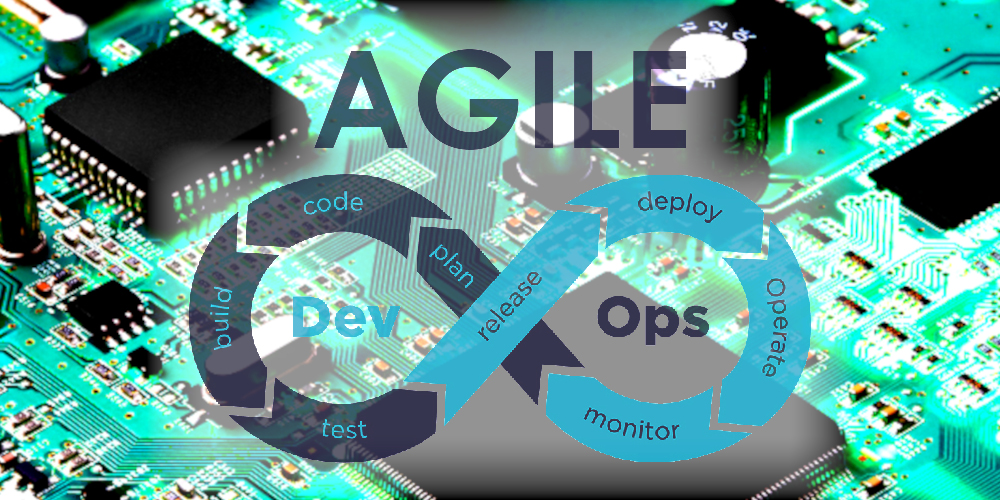
Agile For Hardware Development
Published 2/2026
Created by J C | Auto PjM Institute
MP4 | Video: h264, 1920x1080 | Audio: AAC, 44.1 KHz, 2 Ch
Level: Beginner | Genre: eLearning | Language: English | Duration: 16 Lectures ( 2h 25m ) | Size: 1.37 GB
✓ Understand the true Agile mindset - beyond ceremonies and terminology
✓ Translate Agile concepts into practical hardware development strategies
✓ Align hardware and software development timelines effectively
✓ Identify when Agile should NOT be applied in hardware projects
Requirements
● There are no strict prerequisites for this course, but the following background will help: • Basic understanding of hardware product development (mechanical, electrical, electronics, or systems) • Familiarity with structured development models such as Phase Gate or V-Model • Some exposure to Agile concepts (helpful but not mandatory) • Interest in improving cross-functional coordination between hardware and software teams This course is designed specifically for engineers and technical project managers working in real hardware environments. No prior Agile certification or software background is required.
Description
[ Disclosure : How This Course Is Created (AI Transparency Statement)
- This course contains the use of artificial intelligence.
- This course uses Artificial Intelligence responsibly and transparently to improve clarity and accessibility - not to replace engineering thinking.
- AI-generated voice narration is used to ensure clear, consistent, and distraction-free explanations. ]
Agile for Hardware Development - A Practical Guide to Applying Agile in Real Hardware Programs
Most Agile training is built for software teams.
Short iterations.
Instant builds.
Continuous deployment.
But hardware teams live in a different reality.
Physical prototypes.
Supplier lead times.
Tooling investments.
Validation cycles.
Compliance requirements.
And yet, today many hardware teams are being asked to "become Agile" - often without clear guidance on how that actually works in mechanical, electronics, embedded, and mechatronic environments.
This course was created to solve that gap.
What This Course Is About
This is not a Scrum certification course.
This is not a software-only Agile course.
This course teaches you how to
• Translate Agile mindset into hardware reality
• Apply iteration thinking to prototype-driven development
• Reduce late-stage design failures using risk-driven planning
• Align hardware and software timelines intelligently
• Design hybrid lifecycle models combining Phase Gates and Agile
• Structure hardware sprints around risk and maturity, not just features
• Manage Engineering Change Orders in an Agile-compatible way
• Scale Agile across multi-supplier hardware programs
• Identify when Agile should NOT be used
You will learn how to move learning earlier - without ignoring physics, manufacturing, or compliance.
Who this course is for
■ This course is designed for: • Mechanical engineers involved in product development • Electrical and electronics engineers working on embedded or hardware systems • Systems engineers coordinating multi-domain development • Hardware Technical Project Managers or Program Managers • New Product Introduction (NPI) and manufacturing engineers • Engineering leaders responsible for hybrid hardware-software products This course is especially valuable for professionals working in automotive, industrial equipment, consumer electronics, robotics, aerospace, and other hardware-driven industries. It is ideal for those who are being asked to "implement Agile" in hardware environments and want a practical, realistic approach instead of software-only theory. This course is NOT intended for pure software teams looking for standard Scrum training.






 Agile For Hardware Development