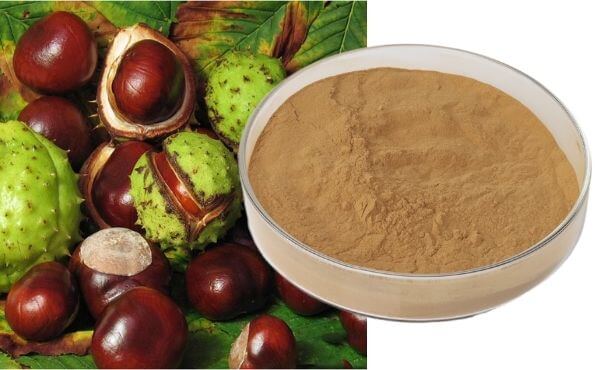
The horse chestnut tree (Aesculus hippocastanum), with its distinctive spiked fruits and gleaming seeds, is a familiar sight in parks and avenues across Europe and North America. For decades, an extract from its seeds has been a staple in European phytotherapy, valued for its targeted support of venous circulation. Today, this extract is a global commodity, and for brands seeking to formulate with it, a significant portion of the wholesale supply flows through Chinese manufacturers. Sourcing
horse chestnut extract is a practical exercise in navigating a specialized botanical trade, where European raw materials meet Asian extraction expertise, all governed by a single, critical chemical marker: aescin.
First, it's essential to understand what you are buying. Horse chestnut extract is not a simple powder. Its entire value and efficacy hinge on its standardization to a precise percentage of aescin (also called escin), the complex mixture of triterpene saponins responsible for the extract's noted activity. Common commercial specifications are 20% aescin, though 16% and higher grades are also available. This standardization is the cornerstone of the ingredient. It transforms a variable seed into a reliable, doseable material, allowing supplement manufacturers to ensure each capsule delivers a consistent, pharmacologically relevant amount of the active constituent. The extract itself is typically a fine, bitter-tasting, light brown to beige powder.
Here lies the central dynamic of the supply chain: the raw material and the processing hub are often continents apart. The horse chestnut seeds themselves are primarily cultivated and harvested in Europe, particularly in regions with established agricultural practices for this specific botanical. However, China has become a dominant player in the extraction and standardization phase. This is due to the country's massive investment in industrial-scale phytochemical infrastructure. Chinese processors import bulk, dried horse chestnut seeds, then utilize advanced solvent extraction and purification technologies to concentrate and standardize the aescin content efficiently and at a high volume. Their competitive advantage lies in this technical capability and cost-effectiveness, not in local sourcing of the raw nut.
This split-origin model creates a unique set of considerations for a buyer. The primary benefit offered by Chinese suppliers is often significant cost savings on a standardized, high-quality active ingredient, making product formulation commercially viable. However, this very structure amplifies the need for absolute transparency and rigorous documentation. Traceability becomes paramount.
A professional supplier must be able to provide a clear chain of custody for the raw seeds, including their geographical origin. This is crucial for quality assurance—different growing conditions can affect aescin profiles—and for meeting the stringent regulatory requirements of markets like the United States or Europe, where botanical sourcing is closely scrutinized.
Consequently, the Certificate of Analysis (CoA) is the single most important document in the transaction. It must perform two non-negotiable functions:
Verify Potency: It must unequivocally state the percentage of aescin, confirmed by HPLC analysis. A specification of "20% extract" is meaningless; it must read "20% aescin."
Confirm Safety and Purity: It must provide a complete contaminant profile. This is especially critical given the agricultural origin and complex processing. The CoA must list:
Aescin Content: The active marker percentage.
Heavy Metals: Levels of arsenic, cadmium, lead, and mercury.
Pesticide Residues: A full multi-residue analysis.
Microbiological Limits: Total plate count, yeast, mold, E. coli, Salmonella.
Solvent Residues: Verification that any solvents used in extraction (often ethanol) are within safe limits.
Given the extended supply chain, insisting on a batch-specific CoA from the Chinese processor, and potentially a separate analysis of the raw seed origin, is a sign of a diligent buyer. Requesting a physical sample matching the CoA for your own verification is standard practice.
The commercial details follow this technical groundwork. Minimum Order Quantities (MOQs) can range from 10kg to 100kg or more. Packaging must be airtight, often with desiccant, to protect the stability of the saponins. Perhaps most importantly, the supplier must demonstrate expertise in the regulatory landscape of your target market. Can they provide a comprehensive dossier that includes not just their own CoA, but evidence of Good Manufacturing Practices (GMP), and information aligned with monographs from authorities like the European Pharmacopoeia or the German Commission E? Their ability to navigate this complex paperwork is a key indicator of their suitability as a partner for a regulated health product.
Sourcing wholesale horse chestnut extract from China is a specialized endeavor that sits at the intersection of global agriculture and modern phytochemistry. It is a process built on chromatography reports, validated supply chains, and meticulous documentation, not on pastoral imagery. Success lies in partnering with a supplier whose commitment to analytical precision and regulatory transparency is as robust as their extraction technology. In this market, the true value of the extract is defined equally by its percentage of aescin and by the clarity of the paperwork that traces its journey from a European tree to a drum of powder in a Chinese factory.






 Horse Chestnut Extract: Sourcing Aescin from the Global Supply Chain