Among the many botanical extracts that flow from Chinese manufacturing hubs to the global market, few have attracted as consistent and widespread interest as soybean extract standardized to 40% isoflavones. This specification—
40% isoflavones by HPLC—has become something of an industry benchmark, representing the concentration most commonly sought by formulators developing products for women's health, bone support, and general wellness.
For manufacturers and procurement professionals evaluating this ingredient, understanding what the specification means, how Chinese suppliers deliver it consistently, and where it fits within the broader landscape of botanical ingredients is essential knowledge.
Understanding the 40% HPLC Specification
When a supplier offers "Soy Isoflavones 40% HPLC," they are making a precise claim about their product's composition. The 40% refers to the total concentration of isoflavone compounds—primarily genistin, daidzin, and glycitin, along with their respective aglycone forms—present in the final extract . The HPLC designation indicates the testing method used to verify this concentration: High-Performance Liquid Chromatography, the analytical gold standard for quantifying individual compounds in complex botanical mixtures .
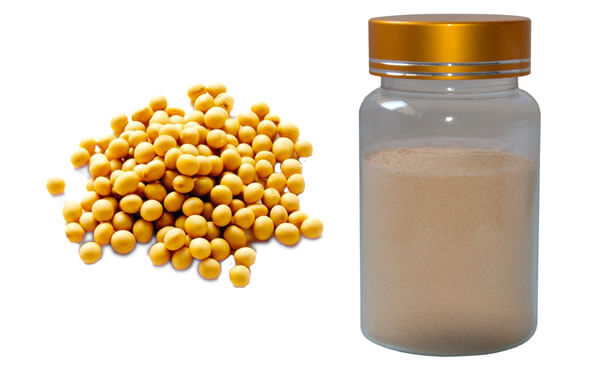
Quality soybean isoflavone extract standardized to 40% typically presents as a fine brown to yellow powder with the characteristic odour and taste of the source material . It is produced from the pressed seed cake of Glycine max—the familiar soybean—after the oil has been removed for other uses . This makes it a co-product of the soybean oil industry, utilising material that might otherwise go to waste and transforming it into a valuable ingredient for nutraceutical applications .
The 40% concentration represents a balance between potency and practicality. Higher concentrations are possible—50%, 60%, or even 90% extracts exist in the market—but 40% offers an effective dose in a cost-effective format, making it the preferred choice for many mainstream supplement formulations .
The Science Behind the Ingredient
Soy isoflavones belong to a class of compounds known as phytoestrogens—plant-derived substances that can weakly bind to oestrogen receptors in the human body . This property underpins most of the research interest in soy isoflavones and explains their primary applications in dietary supplements.
The major isoflavones in soy exist in two primary forms:
Glycosides: Genistin, daidzin, and glycitin (bound to a sugar molecule)
Aglycones: Genistein, daidzein, and glycitein (the active forms after digestion)
When an extract is standardized to 40% total isoflavones by HPLC, the certificate of analysis typically breaks down the contribution of each individual compound, giving formulators confidence in the consistency of their raw material batch after batch .
Research has explored soy isoflavones for several health applications:
Menopausal comfort: The structural similarity to oestrogen allows isoflavones to help balance hormonal changes during menopause, potentially reducing the frequency and intensity of hot flushes
Bone health: Some studies suggest soy isoflavones may support bone mineral density, particularly in postmenopausal women
Cardiovascular wellness: Isoflavones have been associated with healthy cholesterol levels already within the normal range
Antioxidant activity: Like many plant polyphenols, isoflavones contribute to the body's defence against oxidative stress
The Chinese Supplier Landscape
China's position as a leading source of soy isoflavones extract reflects several advantages: abundant access to high-quality soybeans, decades of investment in extraction infrastructure, and a mature manufacturing sector capable of meeting international quality standards.
Manufacturing Capabilities
Chinese manufacturers have developed sophisticated processes for producing consistent, high-quality soy isoflavones. The production typically follows several key steps:
Raw material selection: Defatted soybean flakes or meal serve as the starting material, sourced from non-GMO soybeans when required for specific markets
Extraction: Aqueous alcohol or other food-grade solvents extract the isoflavone-rich fraction from the defatted material
Concentration and purification: Various chromatographic techniques enrich the isoflavone content to the target 40% concentration
Drying: Spray-drying or vacuum drying produces the final fine powder
Standardization: HPLC analysis confirms the 40% concentration and profiles individual isoflavones
Quality control: Comprehensive testing ensures compliance with specifications for heavy metals, microbiology, and residual solvents
Companies with established track records, such as Huisong Pharmaceuticals with thirty years in botanical science innovation, have transformed into global suppliers with highly integrated supply chains supporting portfolios that include botanical extracts, food ingredients, and traditional Chinese medicine components . These manufacturers often maintain the ability to independently test for up to 473 kinds of pesticides and other critical quality control points, demonstrating the depth of their analytical capabilities .






 The 40% Standard: Sourcing Soy Isoflavones Extract from Chinese Suppliers