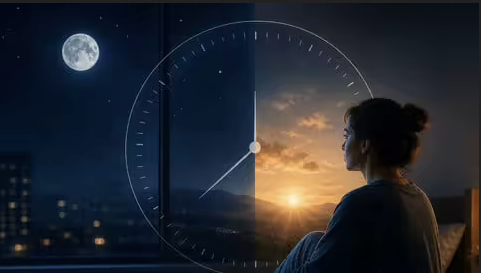
Sighted Non-24 Sleep-awake Disorder
MP4 | Video: h264, 1920x1080 | Audio: AAC, 44.1 KHz
Language: English | Size: 1.23 GB | Duration: 0h 30m
Recognition, Neurobiology, and Practical Intervention
What you'll learnUnderstand the clinical presentation and mechanisms of Non-24-Hour Sleep-Wake Disorder
Explain how the circadian rhythm regulates sleep-wake cycles in sighted individuals
Identify the role of the suprachiasmatic nucleus in circadian timing and misalignment
Recognise early, progressive, and chronic symptoms of N24SWD
Differentiate N24SWD from Delayed Sleep Phase Disorder and other sleep disorders
Understand diagnostic approaches and common misdiagnoses
Apply structured strategies to manage shifting sleep-wake patterns
Develop behavioural and cognitive approaches to improve daily functioning
Manage fatigue, cognitive disruption, and emotional regulation challenges
Evaluate the use of light therapy in circadian alignment
Understand the role and limitations of melatonin in treatment
Apply principles of chronotherapy safely and realistically
Support occupational, academic, and social functioning despite circadian instability
Address the psychological impact, including isolation and identity disruption
Communicate effectively with healthcare providers and support networks
Promote long-term adaptation and sustainable coping strategies
Requirements
No prior requirements
Description
This course contains the use of artificial intelligence and incorporate AI-generated visuals and voice elements to enhance clarity, accessibility, and overall presentation quality. It provides a structured, evidence-based understanding of Non-24-Hour Sleep-Wake Disorder in sighted individuals, integrating neuroscience, behavioural science, and practical management strategies. It is designed to move beyond general sleep advice by addressing the underlying circadian mechanisms that drive persistent sleep-wake misalignment.Learners will explore how circadian disruption impacts cognitive performance, emotional regulation, attention, memory consolidation, and daily functional capacity, while also developing realistic, sustainable approaches to managing unstable or shifting sleep patterns. The course further examines the bidirectional relationship between circadian rhythm instability and mental health, including increased vulnerability to anxiety, depressive symptoms, and emotional dysregulation over time. Particular attention is given to the lived experience of chronic circadian misalignment, including its effects on identity, motivation, social participation, and occupational stability, as well as the often overlooked psychological burden of feeling disconnected from conventional time structures.In addition, the course highlights adaptive coping frameworks, behavioural anchoring techniques, and environmental modification strategies that can support improved functioning without relying on oversimplified or generic sleep hygiene advice. It also introduces evidence-informed perspectives on chronobiology and neuroplastic adaptation, helping learners understand how the brain and body attempt to recalibrate under persistent circadian drift.Suitable for both individuals experiencing N24SWD and professionals working in health, psychology, or neuroscience-related fields, this course bridges theory and application. It offers clinically grounded, research-informed insights that can be translated into real-world adaptation, improved self-management, and more compassionate understanding of circadian rhythm disorders in practice.
Individuals experiencing symptoms of Non-24-Hour Sleep-Wake Disorder,People with irregular or drifting sleep-wake cycles seeking structure and understanding,Healthcare professionals interested in circadian-related conditions and sleep disorders,Psychologists and therapists supporting clients with chronic sleep disruption,Medical and health science students seeking applied knowledge in circadian rhythm disorders,Caregivers and family members supporting someone with N24SWD,Occupational health professionals addressing fatigue and performance impairment,Individuals misdiagnosed with other sleep conditions such as Delayed Sleep Phase Disorder,Shift workers or professionals struggling with circadian misalignment,Anyone interested in evidence-based strategies to manage long-term sleep instability






 Sighted Non-24 Sleep-awake Disorder