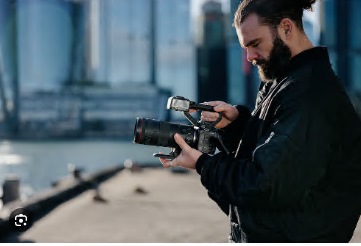
 Photography - I - Natural Lighting & Camera Handling
Published 4/2026
Created by Owamamwen Friday Abiodun Ogunniyi
MP4 | Video: h264, 1920x1080 | Audio: AAC, 44.1 KHz, 2 Ch
Level: Beginner | Genre: eLearning | Language: English | Duration: 60 Lectures ( 2h 1m ) | Size: 5.1 GB
✓ A photography project manager plans shoots, manages budgets, coordinates teams, schedules tasks, and ensures timely delivery of high-quality visual results.
✓ Estimate outlines timeline for planning, shooting, editing, and delivery, with budget covering crew, equipment, locations, permits, and post-production costs.
✓ Photography project risks include weather, equipment failure, budget overruns, scheduling delays, location issues, and missed client expectations.
✓ Completed photography project as case study: planned concept, executed shoot, managed timeline, edited images, and delivered final curated visual story.
Requirements
● No. You don't need to be professional before learning photography. Photography is a skill you build step by step. Most professionals started as beginners who learned basics like exposure, composition, lighting, and camera handling through practice.
Description
Roma often refers to the film-Roma art, which represents everyday life with deep emotional realism. It highlights ordinary moments to reveal larger social truths.
Example: A simple scene of cleaning a house reflects class differences and human connection.
Philosophy Concept
A philosophy concept is an abstract idea used to understand reality, knowledge, or existence-like truth, ethics, or identity. These concepts help structure critical thinking.
Example: The concept of "duality" explores opposites like good vs. evil.
Reality
Reality is the state of things as they actually exist, independent of perception or imagination. In art or film, it may be interpreted subjectively.
Example: Two people may experience the same event differently, shaping their personal "reality."
Capture
To capture means to record or preserve a moment, idea, or image using tools like cameras or writing. It often implies authenticity.
Example: A photograph capturing a candid smile preserves a genuine emotion.
Shooting
In filmmaking, shooting refers to the process of recording scenes with a camera. It involves planning angles, lighting, and performance.
Example: A director shoots a scene multiple times to achieve the desired emotional effect.
students studying art or media may analyze photographs of Rome to understand cultural identity.
A picture of an ancient street may seem to represent reality, but the photographer's choices influence how viewers perceive it. This helps students learn critical thinking: images are not just records, but constructed meanings.
Who this course is for
■ Professional is a result of learning and experience, not a requirement to begin.






 Photography - I - Natural Lighting & Camera Handling



