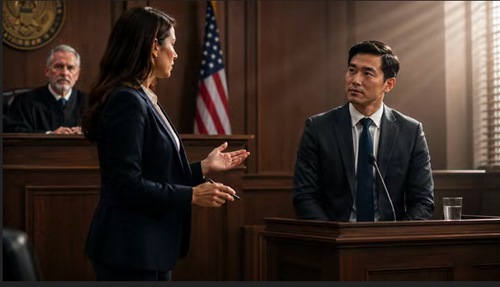
 Spotlight On The Witness
Published 6/2026
MP4 | Video: h264, 1920x1080 | Audio: AAC, 44.1 KHz, 2 Ch
Language: English | Duration: 2h 32m | Size: 1.76 GB
Direct Examination Done Right
What you'll learn
Apply the "Fred Astaire" Principle
Formulate effective non-leading questions
Organize a direct examination using the chapter method
Manage pace and flow during testimony
Requirements
No prerequisites.
Description
Experienced trial lawyers recognize that most trials are won on the strengths of their case and not on the weaknesses of their adversary's case. Direct examination that clearly and effectively presents the witness's observations through a narrative lens will have a decisive effect on the outcome of the trial. The attorney's job is to make the witness and the story she is telling interesting, compelling, and credible. Direct examination is a partnership in which one of the partners, the attorney, fades into the background so that all of the jury's attention can be on the other partner, the witness.
Learning objectives
-
Apply the "Fred Astaire" Principle - Conduct a direct examination in which the attorney fades into the background, keeping the focus on the witness as the primary storyteller rather than on the lawyer.
-
Formulate effective non-leading questions - Craft open-ended questions using appropriate prompts (who, what, when, where, how, describe, tell us) that place narrative control with the witness while still subtly guiding testimony through strategic word choice.
-
Organize a direct examination using the chapter method - Structure testimony topically - humanizing the witness, setting the scene, building to the critical event, clarifying key facts, and reinforcing the defense theory - rather than defaulting to strict chronology.
-
Manage pace and flow during testimony - Identify when to slow down at critical moments, vary rhythm to maintain juror engagement, and avoid cluttering the narrative with unnecessary detail.
-
Demonstrate authentic human connection with a witness - Use conversational, legalese-free language, maintain eye contact, ask genuine follow-up questions, and adjust tone to match the emotional content of the testimony.
-
Prepare and rehabilitate challenging witnesses - Develop strategies for handling witnesses who are monosyllabic, rambling, emotionally suppressed, or unable to remember key details, without resorting to leading questions.
-
Incorporate visual and demonstrative evidence - Identify opportunities during direct examination to introduce exhibits, physical evidence, and visual aids that anchor testimony and help jurors process complex or critical information.
-
Evaluate the strategic decision of calling a witness - Weigh the benefits and risks of putting a witness on the stand - including the defendant, alibi witnesses, character witnesses, and fact witnesses - against factors such as impeachment potential, credibility, and alignment with the theory of the case.
Who this course is for
Lawyers
Law students
Mock trial students






 Spotlight On The Witness