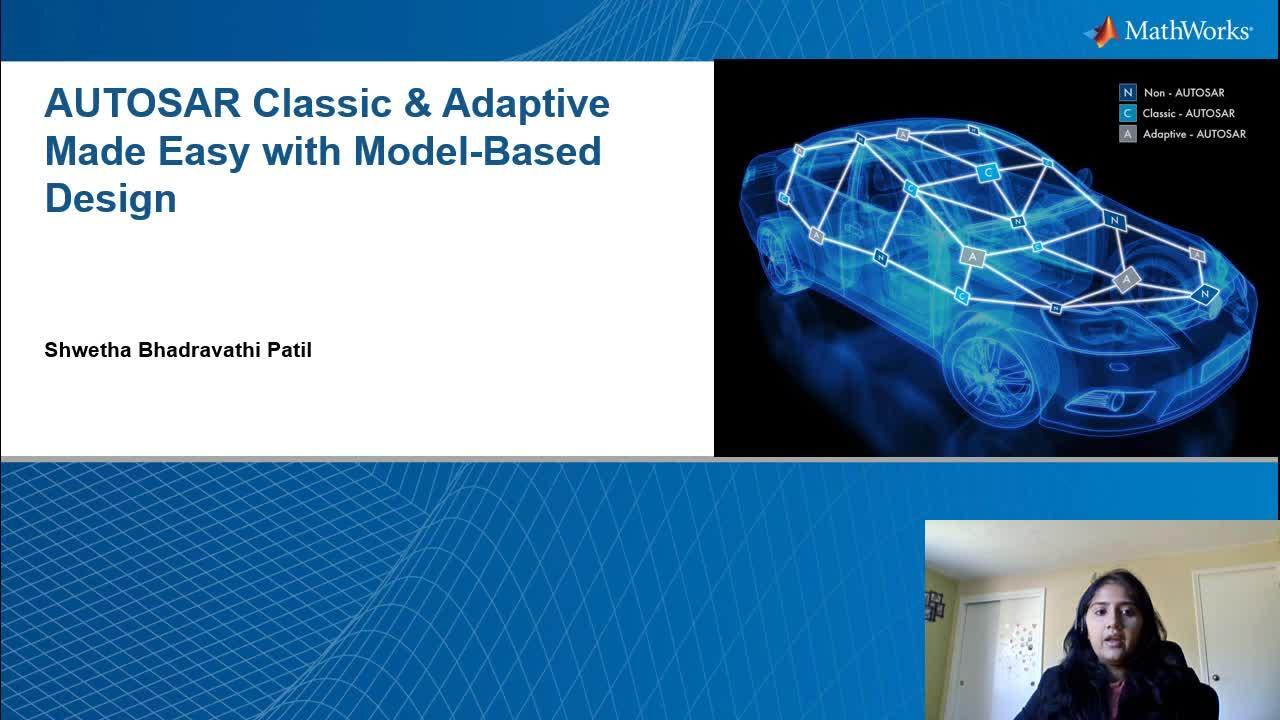
Developing Autosar Applications With Model-Based Design
Last updated 2/2026
Created by OS Academy
MP4 | Video: h264, 1920x1080 | Audio: AAC, 44.1 KHz, 2 Ch
Level: All Levels | Genre: eLearning | Language: English + subtitle | Duration: 22 Lectures ( 5h 47m ) | Size: 3.3 GB
✓ Understand the AUTOSAR architecture (Classic Platform) and its core layers: Application, RTE, and BSW, and how they interact within automotive software systems.
✓ Build and model AUTOSAR Classic Software Components using Simulink and AUTOSAR Blockset within a Model-Based Design workflow.
✓ Apply Simulink to AUTOSAR mapping concepts, including mapping model elements to AUTOSAR elements such as Runnables, Ports, and Interfaces.
✓ Perform practical AUTOSAR mappings from Simulink models to AUTOSAR components and analyze the generated code and ARXML files.
✓ Understand the role of ARXML files in AUTOSAR systems, their structure, and how they represent software architecture and configuration data.
✓ Integrate Model-Based Design concepts into AUTOSAR application development workflows used in real automotive projects.
Requirements
● Basic knowledge of MATLAB and Simulink.
● Familiarity with C programming concepts is recommended (but not mandatory).
● No prior experience with AUTOSAR is required - the course starts from the fundamentals and builds up progressively.
● A PC or laptop capable of running MATLAB/Simulink and AUTOSAR Blockset.
● MATLAB/Simulink with AUTOSAR Blockset installed (trial or licensed version).
Description
This course provides a structured and practical introduction to AUTOSAR application development using a Model-Based Design (MBD) approach. It is designed for engineers who want to understand how AUTOSAR Classic is applied in real automotive software development workflows using MATLAB/Simulink.
You will start by building a solid foundation in AUTOSAR architecture, including a clear understanding of the Application Layer, Runtime Environment (RTE), and Basic Software (BSW), and how these layers interact within modern automotive systems. The course then transitions from architecture to practice by introducing AUTOSAR Blockset and the tools used to model AUTOSAR Classic software components in Simulink.
A core focus of this course is the Simulink to AUTOSAR mapping process, where you will learn how model elements are translated into AUTOSAR elements such as Runnables, Ports, and Interfaces. Through step-by-step practical examples, you will see how entry-point functions are mapped to AUTOSAR runnables, how model inputs and outputs are mapped to AUTOSAR ports and interfaces, and how these mappings are reflected in the generated code and ARXML files.
You will also gain a clear understanding of ARXML files, their role in AUTOSAR systems, their structure, and how they represent software architecture and configuration data in AUTOSAR-based projects.
By the end of this course, you will not only understand AUTOSAR concepts theoretically, but you will be able to model, map, and analyze AUTOSAR Classic software components using a real Model-Based Design workflow, preparing you for practical automotive software development environments used in industry.
This course is ideal for engineers who want a clear, structured, and hands-on pathway into AUTOSAR application development using modern model-based engineering practices.
Who this course is for
■ Embedded Systems Engineers who want to understand and work with AUTOSAR Classic in real automotive software projects.
■ Model-Based Design (MBD) Engineers who want to integrate AUTOSAR into their Simulink-based development workflows.
■ Automotive Software Engineers seeking a practical, model-based approach to AUTOSAR application development.
■ Engineering students and fresh graduates interested in automotive embedded systems and AUTOSAR-based development.
■ Control and systems engineers who want to transition from pure modeling to AUTOSAR-based software architectures.
■ Not intended for: Complete beginners with no background in engineering, embedded systems, or MATLAB/Simulink.
■ Not intended for: Learners looking for theoretical-only AUTOSAR content without practical modeling and mapping.






 Developing Autosar Applications With Model-Based Design