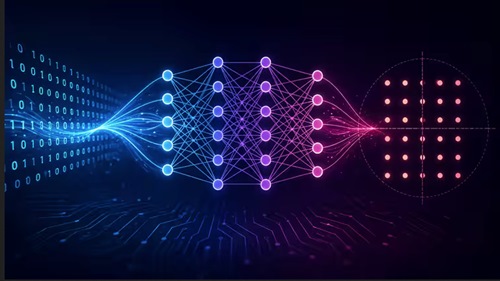
 Telecom Ai: Neural Networks For Wireless Transceivers
Published 4/2026
MP4 | Video: h264, 1920x1080 | Audio: AAC, 44.1 KHz, 2 Ch
Language: English | Duration: 2h 54m | Size: 1.54 GB
Explore AI-based modulation and demodulation techniques for wireless communication systems
What you'll learn
Explain how neural networks can replace or augment classical modulation and demodulation in wireless transmitters and receivers.
Design a neural network-based wireless transmitter and receiver pipeline, including inputs, outputs, and training objectives.
Apply neural networks to practical wireless communication scenarios using intuitive case studies and visual explanations.
Provide confidence to the learner for more complex implementation of AI techniques in communication. Student can explore sionna libraries after this course
Requirements
Basic understanding of digital communication systems such as modulation, demodulation, and signal flow in transmitters and receivers. Familiarity with fundamental machine learning or neural network concepts is helpful but not mandatory.
Description
Modern wireless communication systems are increasingly exploring neural networks as alternatives to classical signal processing blocks. Instead of relying only on fixed mathematical models, learning-based approaches allow transmitters and receivers to adapt to complex channel conditions.
This course introduces neural network-based transmitter and receiver design in a clear, intuitive, and system-level manner. You will learn how neural networks can mimic digital modulation and demodulation, understand what they learn, and how they fit into a practical wireless communication pipeline.
Rather than focusing on heavy mathematics or black-box coding, this course emphasizes conceptual clarity, visual explanations, and engineering intuition. Through carefully designed animations and examples, you will see how bit streams can be mapped to complex symbols using neural networks, how receivers can recover information, and what trade-offs exist compared to classical communication methods.
By the end of the course, you will have a strong mental model of how AI can be applied at the physical layer of wireless systems and when such approaches make sense in real-world communication scenarios.
Hope, you will enjoy this course and learning something practical for future generation of communication. Wish you happy learning through this course. Finally thanks for taking this course and trusting on us.
Who this course is for
Electronics or computer science students and researchers interested in AI-based alternatives to classical communication system blocks.






 Telecom Ai: Neural Networks For Wireless Transceivers